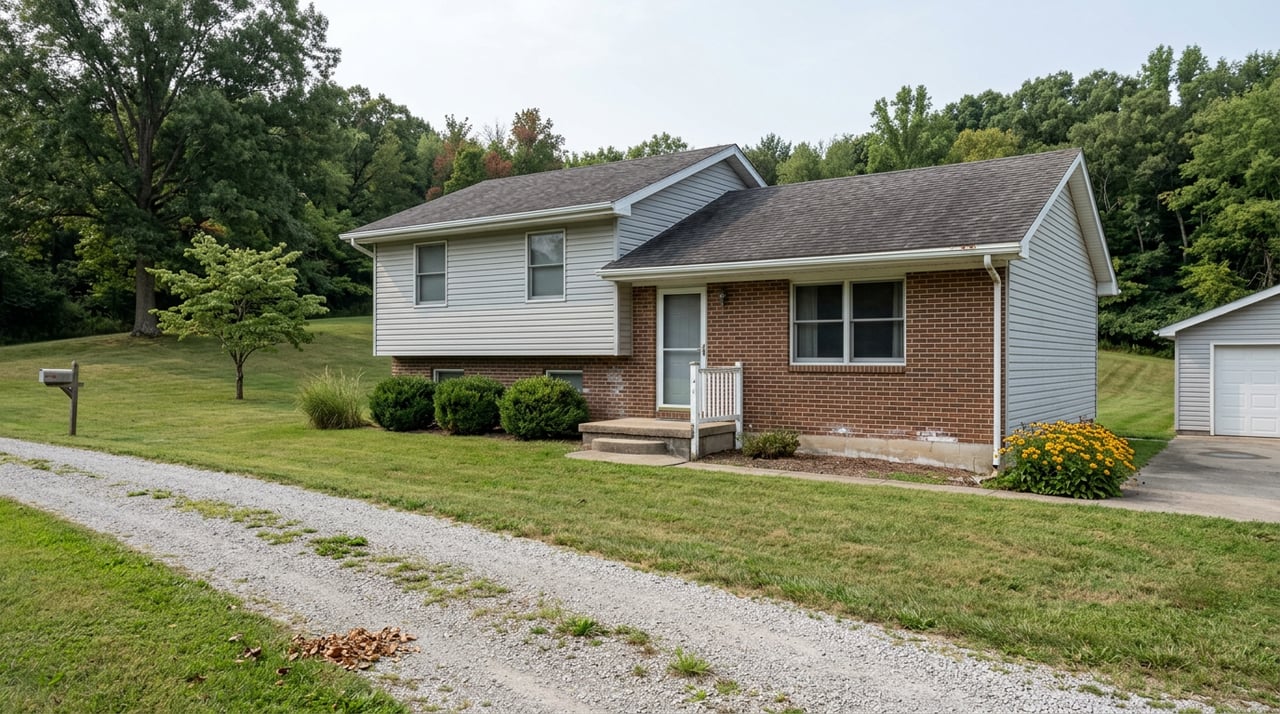
A buyer signs a contract on a farmhouse outside Cedar Bluff. The inspection comes back clean. The appraisal supports the price. Then the title examiner calls with a question nobody asked at the walkthrough: who owns the coal.
That question does not come up in most of Virginia. It comes up constantly in Tazewell County, and it is the single biggest reason a closing here can run longer than a buyer coming from Richmond or Roanoke expects. The house and the land under it are not always the same legal package. Sometimes you are buying the surface. Someone else, or their estate, or a company that hasn't touched the property in decades, still owns what's beneath it.
The estate under the estate
Virginia recognizes something called a severed mineral estate. At some point, a previous owner sold or reserved the coal, gas, or other minerals under a tract while keeping or selling the surface separately. Once that split happens, the surface and the minerals become two distinct legal properties, not a shared interest between two owners. A deed conveying just the surface will often carry language like "less and except minerals previously severed," pointing back to whatever earlier deed did the splitting.
The trouble is what happens when that reference gets dropped. A legal industry publication covering Virginia mineral title work put it plainly: an omitted reference to a severance from decades ago can still surface and complicate a modern examination. The severance itself doesn't go away just because a later deed forgot to mention it.
Why this shows up more here than almost anywhere else
This isn't a quirk unique to one farm. It's a pattern baked into how Southwest Virginia was bought and sold for more than a century. Starting in the 1880s, investors from New York and Philadelphia began forming mining companies and negotiating mineral and timber rights across these counties, often separately from the surface land itself. Norfolk and Western shipped its first coal out of the Pocahontas Coalfield in 1883 and built rail lines through Tazewell toward Norton within a few years. By the 1920s, as many as 125 coal camps had operated across Southwest Virginia, each one sitting on land where the mineral rights had frequently already changed hands independent of the ground itself.
That's not ancient history filed away in a museum. Virginia Energy's own accounting of the state's coal industry lists Tazewell as one of only six counties still producing coal today, alongside Buchanan, Dickenson, Russell, Lee, and Wise. Statewide, that industry produced 9.5 million short tons of coal in 2025, worth an estimated $1.31 billion. Two mines currently tracked in Tazewell County, Big Creek Mine in Jewell Ridge and Virginia Point No. 1 Surface Mine in Horsepen, are still active as of this year. The county still collects a severance tax on coal and gas pulled from the ground, administered through its own Commissioner of Revenue office. None of this is a relic. It's a working part of the local economy that happens to sit underneath residential parcels.
What a title examiner is actually looking for
When an examiner works a Tazewell County title, they are not just running a standard lien search. Depending on how the property's history reads, the depth of the search can vary considerably.
| Document type | What it signals to an examiner |
|---|---|
| Mineral Deed | An outright conveyance of mineral rights, separate from the surface |
| Quitclaim Mineral Deed | A release or transfer of whatever mineral interest a party may hold, without warranting clear title |
| "Less and except" language in a surface deed | A pointer back to an earlier instrument where the minerals were carved off |
Both mineral deeds and quitclaim mineral deeds are recognized, recordable document types in Tazewell County, which tells you how routinely this kind of transaction has happened here compared to counties where minerals were never a factor.
In the more complicated cases, attorneys who handle real estate closings in Tazewell describe examinations that require tracing ownership back to what one local firm's own site calls "a Grant from the King or the Commonwealth." That's not hyperbole. It reflects how far back some of these chains of title actually run, because Virginia's land grant system predates the county itself.
There's also a statutory escape valve worth knowing about, even if it's not something to lean on without a lawyer. Virginia law allows a landowner to petition a court to declare an old mineral claim abandoned if the right to mine hasn't been exercised for 35 years or more, no separate taxes have been paid on that mineral interest, and no deed transferring it has been recorded. If the minerals were mined and then abandoned, the same 35-year clock can apply from the point mining stopped. It's a real process for clearing an old cloud on title, but whether it applies to a specific property is a question for an attorney, not a checklist item a buyer resolves alone.
Who in town actually does this work
This kind of title work isn't outsourced to a call center. In Tazewell, it runs through local firms that have handled these exact chains of title for generations. Altizer, Walk and White PLLC, operating out of the restored Greever Hardware building on Main Street between The Well Coffee Shop and National Bank, has provided real estate and mineral law services to Southwest Virginia clients for more than a century. One of its attorneys, David Grant Altizer, a Tazewell native who's practiced mineral and real estate law locally since the 1970s, has litigated mineral rights cases that reached the Virginia Supreme Court, including Dye v. CNX Gas Co., a 2016 decision addressing coalbed methane ownership.
That's the kind of institutional memory a title examination in this county draws on. It's also why closings here sometimes need a few extra weeks that a buyer moving from a market without this history wouldn't anticipate.
What this means at your closing
None of this means a Tazewell County property is harder to buy or worth less because of it. As of late May 2026, the average home value across Tazewell sat at $159,955, up 3.3% over the previous year, a market that has held steady rather than swung. The mineral rights question is procedural, not a red flag on the house itself. Most residential transactions close without incident once the examiner has done the work.
What it does mean is that timeline expectations should account for it from the start. If you're buying, ask your agent and your title company early whether the property has any documented mineral severance, and don't be surprised if the answer takes a little longer to arrive than it would on a suburban lot outside the coalfields. If you're selling a property that's been in the family for decades, pull whatever old deeds you have before listing. A little advance paperwork can save real time once you're under contract.
A few questions worth asking before you're under contract
Does a severed mineral estate mean someone can start mining under my house? Mineral ownership and the practical right to disturb the surface are governed separately under Virginia law, and specific limits depend on the instrument that created the severance. This is a question for a real estate attorney reviewing your specific deed, not something to assume either way.
Does this affect every property in Tazewell County? No. Many parcels have clean, unsevered title. The point is that the possibility shows up here far more often than in most Virginia markets, so it's worth checking rather than assuming.
Does title insurance cover a mineral rights issue that surfaces after closing? Title insurance policies vary in what they cover regarding mineral and mining rights exceptions. Review your specific policy language with your title company or attorney before closing, not after.
If you're weighing a purchase or a sale in Tazewell County and want a read on what your specific property's history looks like, or you just want a straight answer on current market conditions before you list, Denise Blevins has spent decades working these closings across Southwest Virginia. Get Your Instant Home Valuation and start the conversation with someone who already knows what your title search is likely to turn up.