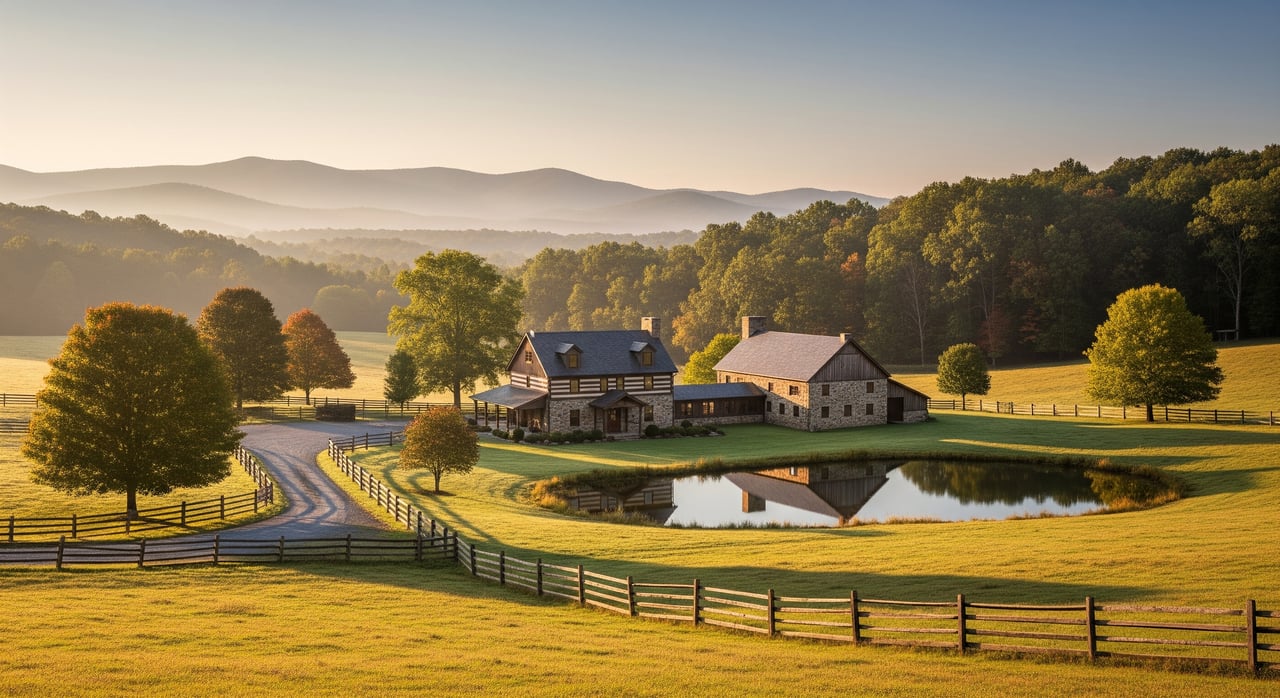
Dreaming about a mountain retreat, a small farm, or a long-term land investment in Southwest Virginia? Buying acreage in Tazewell County can be rewarding, but rural parcels come with details you should verify up front. You want the confidence that you can access the land, build what you plan, and protect your investment. In this guide, you’ll get a clear checklist, local contacts to consult, and a practical timeline that fits how rural deals actually work. Let’s dive in.
Start with access and roads
Road access is the top issue to confirm. Ask whether the entrance is on a public, state-maintained road or a private road that requires a legal right-of-way. If it is private, make sure a recorded easement grants access and outlines who maintains the road.
- Request the deed and any plats that show access or rights-of-way.
- Confirm whether a road is state maintained by checking with the Virginia Department of Transportation.
- Walk and photograph the access route. Look for gates, seasonal low-water crossings, or steep sections that could be hard in winter.
Lenders and title companies often require verified legal access. A clear maintenance plan for any private road will protect you from future headaches.
Confirm boundaries and easements
Boundaries in mountain terrain can be complex. A current survey helps avoid disputes and reveals encumbrances.
- Ask the seller for any prior surveys or plats. If markers are missing or the last survey is dated, order a new boundary survey from a licensed surveyor.
- Look for easements: access, utility, conservation, pipeline or telecom.
- Review the chain of title at the county clerk’s office and include title insurance that lists recorded easements.
If an easement exists, clarify allowable uses, restrictions, and who maintains it before you close.
Check soils, septic, and wells
If you plan to build a home, you must confirm septic feasibility. The local health department regulates onsite sewage systems, and a field evaluation is required to permit your drainfield.
- Use the USDA Web Soil Survey as a first screen. It helps you spot red flags like shallow soils or steep slopes.
- Schedule a soil/site evaluation. Permitting runs through the Virginia Department of Health’s onsite sewage program.
- For water, confirm whether a well exists and whether there is a well log. If you will drill, get quotes from licensed local drillers and plan for water testing.
Soil maps are only a starting point. A licensed professional’s field work is what determines septic approval.
Plan for utilities and connectivity
Rural parcels rarely come with plug-and-play utilities. Map out what you need and the costs to get it.
- Electric: Identify the nearest connection point and request an estimate to extend service.
- Internet and phone: Options can include DSL, cable near towns, fixed wireless, cellular hotspots, or satellite.
- Gas and heating: Natural gas is uncommon. Most owners use propane, oil, or electric.
Document actual cell data speeds during your site visit and confirm service availability with providers before you finalize your plans.
Evaluate floodplains and environmental limits
Water features are common in Tazewell County’s hollows and stream corridors. You want to know if any mapped constraints affect where you can build or cross.
- Check FEMA flood maps for floodplain boundaries and base flood elevations.
- If you see wetlands or plan stream crossings, review state rules with the Virginia Department of Environmental Quality. Some work requires permits or mitigation.
- If conservation easements are present, they limit development. Learn more about easement programs through the Virginia Outdoors Foundation and the Virginia Department of Forestry.
If wetlands or stream buffers are likely, consider hiring an environmental consultant for delineation and permitting guidance.
Investigate mining legacy and slope risks
Southwest Virginia has a long mining history. Some rural tracts include abandoned features or mapped underground workings.
- Review state Abandoned Mine Land records and mining maps through the Virginia Department of Mines, Minerals and Energy.
- On site, look for signs of old benches, adits, or unusual ground depressions.
- Steep slopes can require specialized engineering and increase driveway and foundation costs.
If you suspect subsidence or unstable ground, a geotechnical engineer can provide a site-specific risk review.
Understand zoning and permitted uses
Every county handles land use differently. Parts of rural Virginia have fewer zones, but rules still apply. Before you assume, verify.
- Confirm zoning and permitted uses with Tazewell County Planning and Zoning.
- Ask about minimum lot sizes, setbacks, accessory structures, short-term use limits, and any overlay districts.
- If you plan to subdivide or add structures, review the subdivision ordinance and building permit requirements.
A quick call early in the process can prevent design changes later.
Run the numbers on taxes and programs
Tazewell County tax data and history are available through the county assessor. If your land will be used for agriculture, horticulture, or forest production, Virginia’s use-value program may reduce your tax bill.
- Confirm current tax assessment and any special assessments with the Assessor or Commissioner of the Revenue.
- Ask about eligibility and requirements for use-value taxation.
- Explore state and federal conservation programs that may offset costs for stewardship improvements.
These programs come with management rules, so review them carefully to avoid rollback taxes or penalties.
Protect your title and mineral rights
In parts of Southwest Virginia, mineral or coal rights were separated from surface rights decades ago. You need to know what you own and what you do not.
- Order a full title search. Look for liens, recorded easements, and mineral reservations.
- Ask your title company about exceptions on the title commitment and purchase title insurance.
- If mineral rights are severed or language is unclear, consult a real estate attorney.
Clear title saves you from future conflicts and helps with resale.
A smart due-diligence timeline
Rural transactions take longer because you rely on specialty professionals and county or state reviews. Use this realistic schedule to plan your escrow.
- Pre-offer remote checks: 1 to 7 days for tax records, GIS, flood, soils, and basic mining checks.
- Offer phase: 3 to 14 days to negotiate price and contingencies.
- Survey: 2 to 6 weeks, longer for large or heavily wooded tracts.
- Septic site evaluation and permit: 2 to 12 weeks depending on system type.
- Well drilling and testing: schedule in days to weeks; drilling is usually a few days.
- Title search and clearance: 1 to 4 weeks, longer if issues surface.
- Lender approval and appraisal: about 30 to 45 days from application.
Build contingencies that cover survey, septic and well feasibility, access confirmation, title and mineral-rights review, environmental checks, and financing.
Who to have on your team
The right experts keep your project on track and protect your budget.
- Licensed land surveyor for boundaries, topo, and corner staking.
- Licensed soil scientist or septic designer for field evaluations and system design.
- Licensed well driller or hydrogeologist for new wells and testing.
- Environmental consultant or geotechnical engineer if wetlands, steep slopes, or mine hazards are suspected.
- Real estate attorney for complex title or mineral-rights questions.
- Title company and lender’s appraiser to uncover issues early.
Ask for quotes and lead times up front so your contingency period fits real-world schedules.
Denise’s remote-buyer process
If you are out of the area, you can still move forward with confidence. Here is a proven workflow you can expect.
- Pre-offer research: Parcel packet with county GIS maps, aerials, tax card, seller disclosures, and quick checks on flood, soils, mining, and basic broadband options.
- Contingency plan: Offer with survey, septic, title and mineral-rights, access, environmental review, and financing contingencies.
- Site visit prep: Mapped inspection stops that include gates, driveway entry, potential building pads, septic probe areas, and any known features.
- On-site verification: Full photo and video walkthroughs, optional drone footage where permitted, cell coverage test, and corner checks.
- Documentation: Organized cloud folder for deeds, surveys, soils, permits, quotes, and correspondence, plus a contact list for local pros.
This structure keeps decisions clear and timelines realistic so you can buy with peace of mind.
Quick pre-offer checklist
- Parcel tax ID and assessor’s card
- County GIS aerial and parcel map
- FEMA flood zone check
- NRCS soil map snapshot
- Deed review for easements and mineral reservations
- Preliminary access confirmation with VDOT or deed records
- Broadband and phone coverage quick check
Ready to explore acreage in Tazewell County with a local who knows the terrain, the process, and the right contacts? Reach out to Denise Blevins to set up a consultation and start your search with a plan.
FAQs
What should I verify first when buying rural land in Tazewell County?
- Start with legal road access, a clear path to a septic permit, and any title or easement issues that could limit use.
How do I check if a Tazewell County road is public or private?
- Contact the Virginia Department of Transportation to confirm state maintenance status and ask the seller for recorded easement language if it is private.
How do I know if a parcel will perk for a septic system?
- Use the USDA Web Soil Survey as a screen, then hire a licensed professional to complete a field evaluation and apply through the VDH onsite sewage program.
Are there floodplains or wetlands I should avoid when building?
- Check FEMA flood maps and consult the Virginia DEQ wetlands and streams guidance to understand buffers, permits, and any limits near water.
How do historic mining and mineral rights affect land use?
- Review title for mineral reservations and check the state’s Abandoned Mine Land data via the Virginia Department of Mines, Minerals and Energy; consult a real estate attorney if language is unclear.